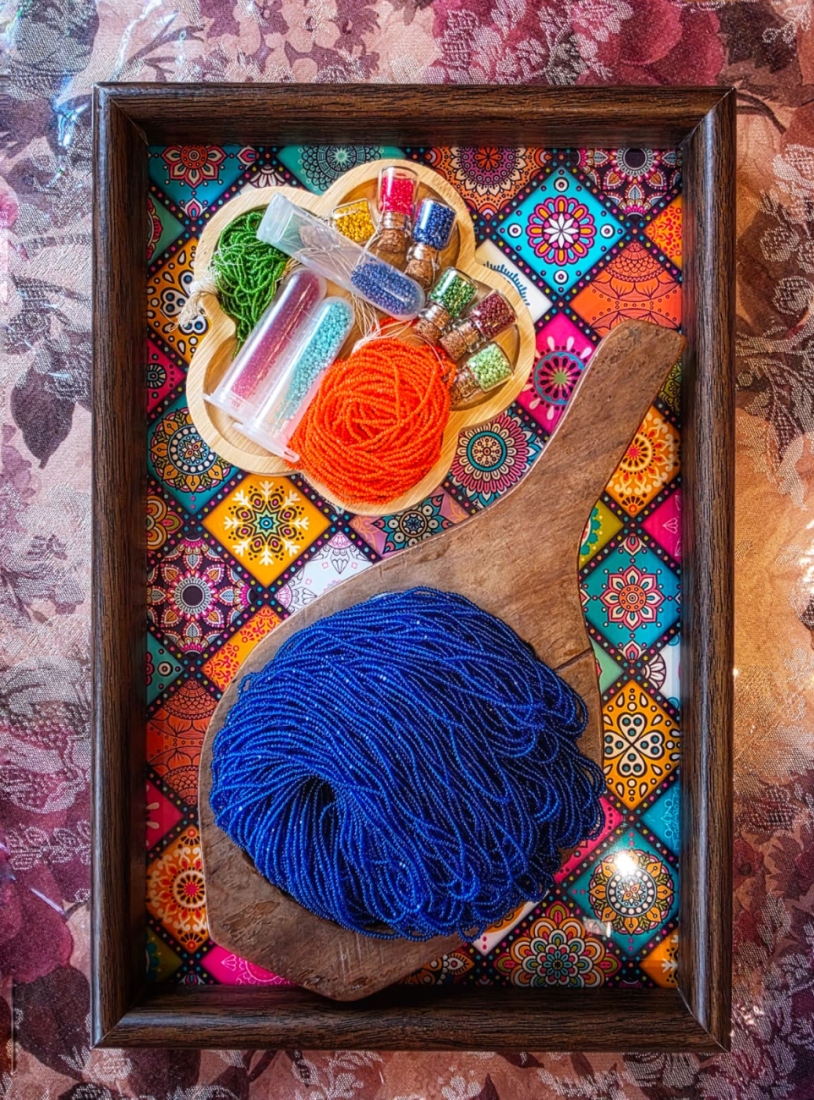
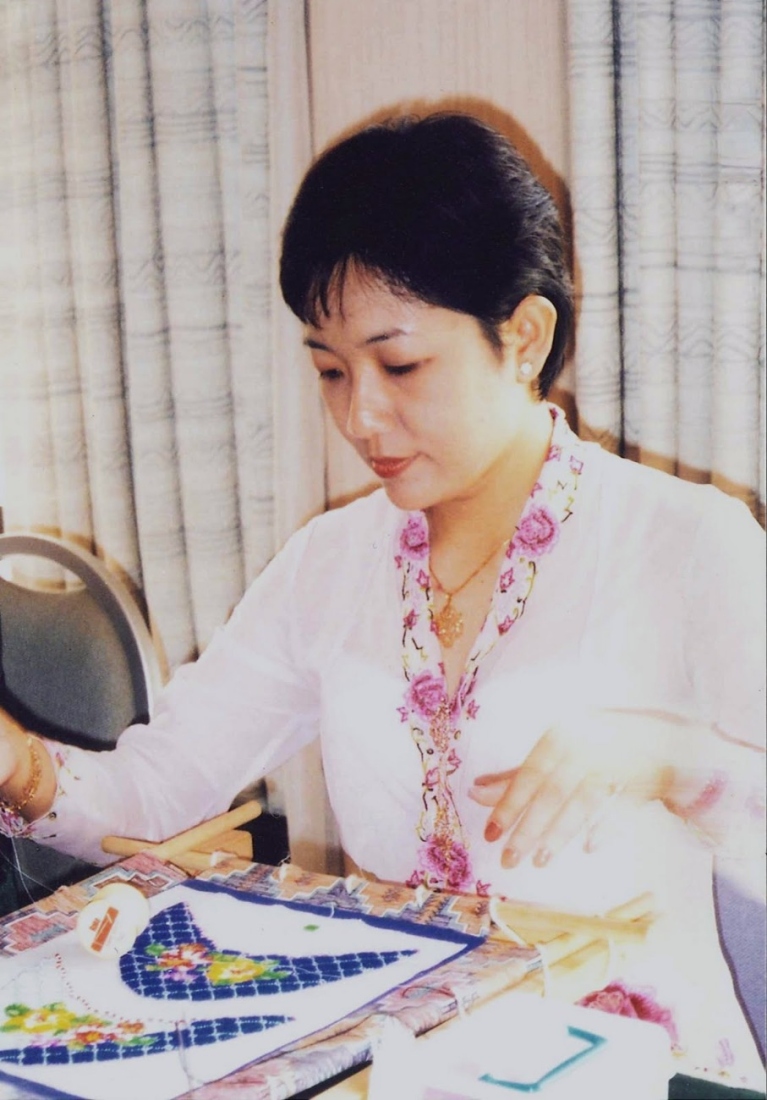
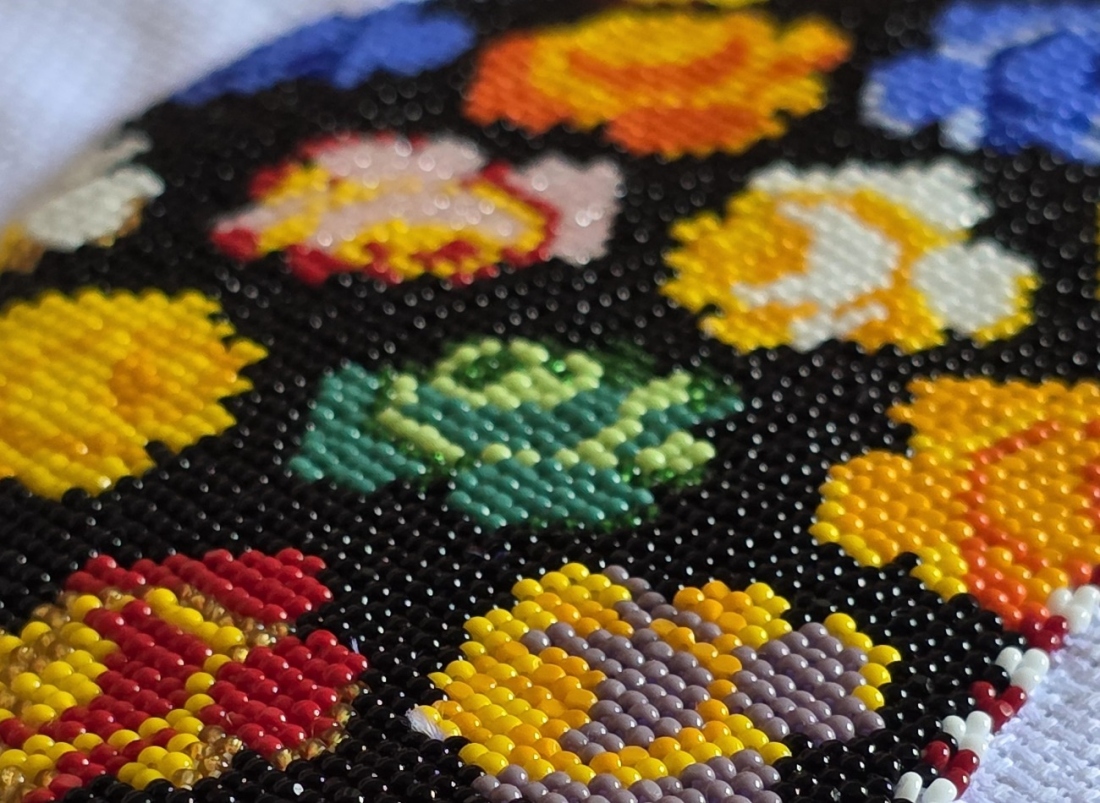
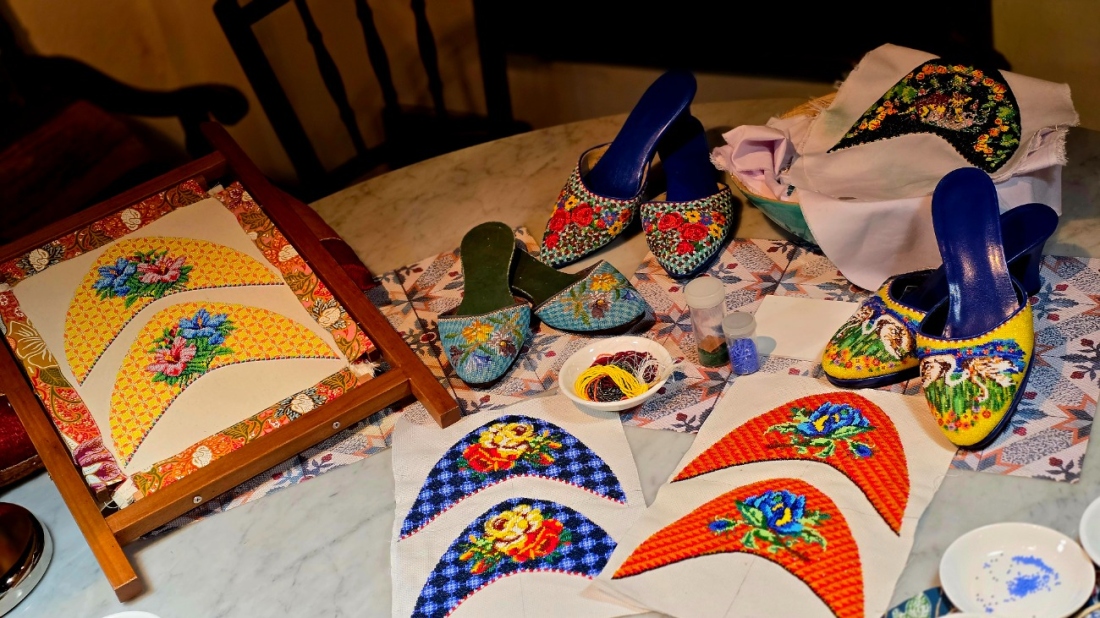
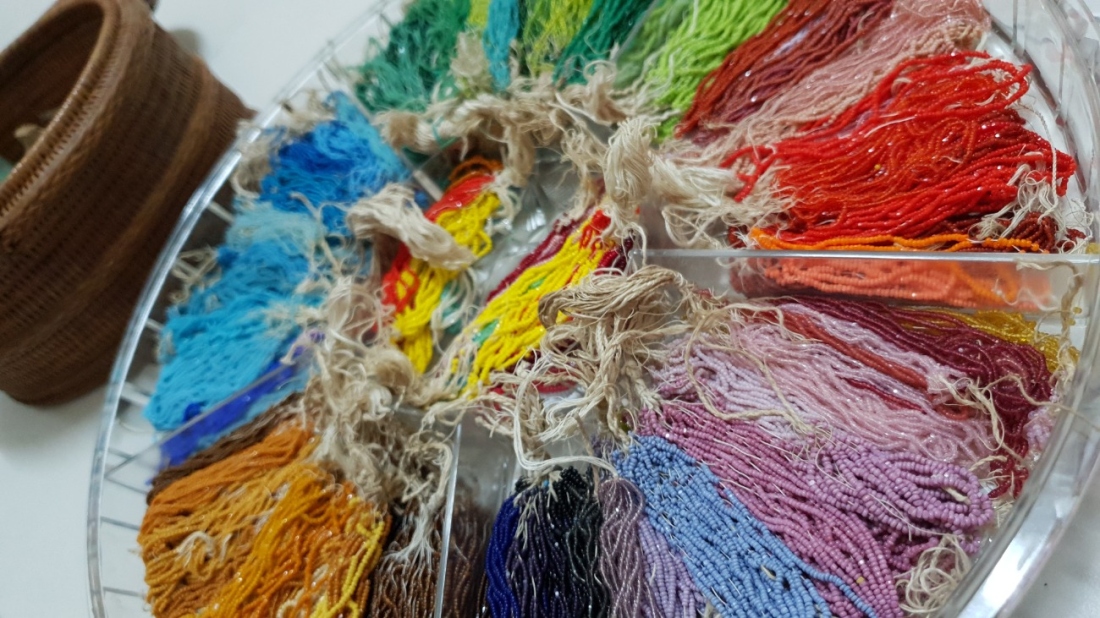
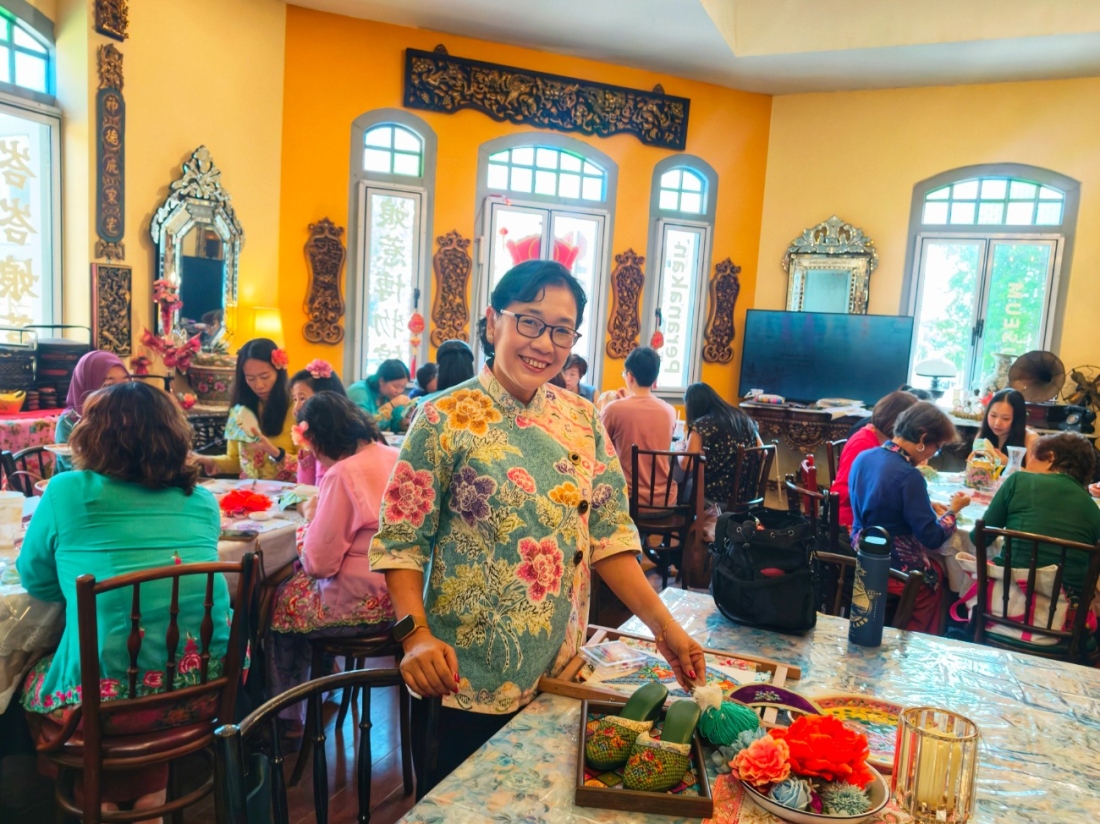
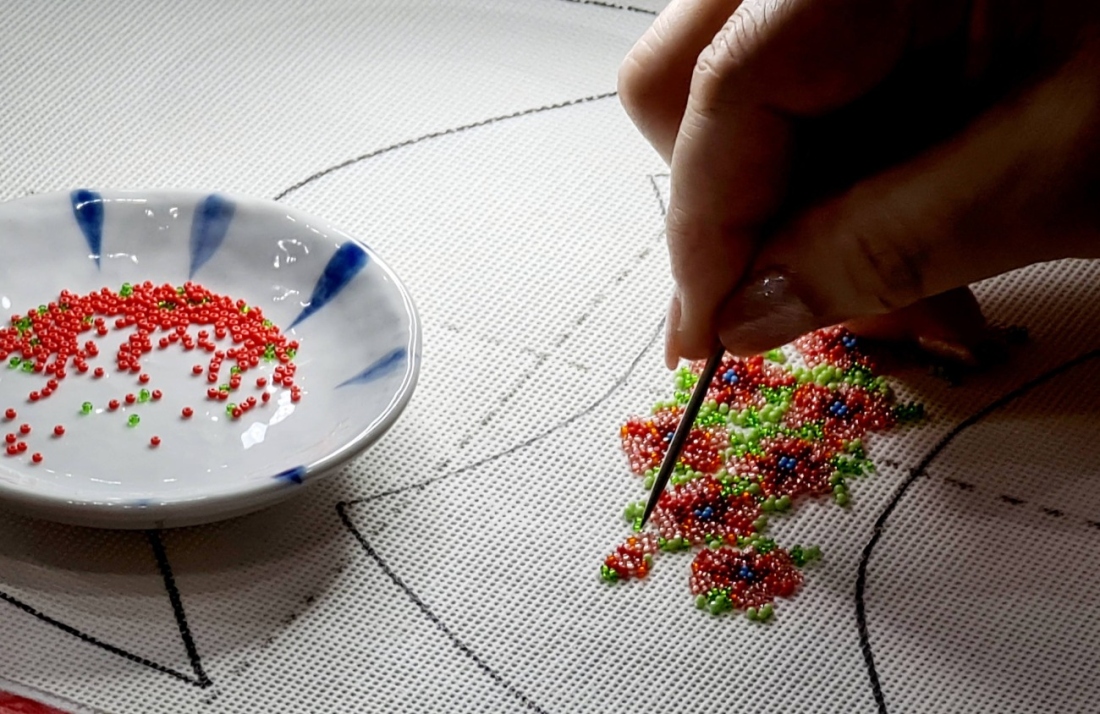
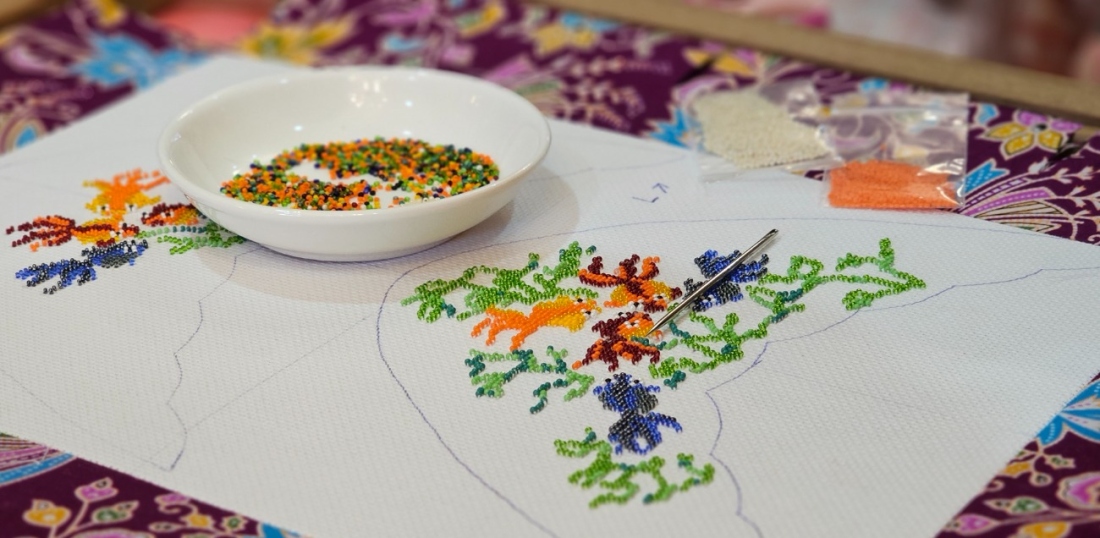
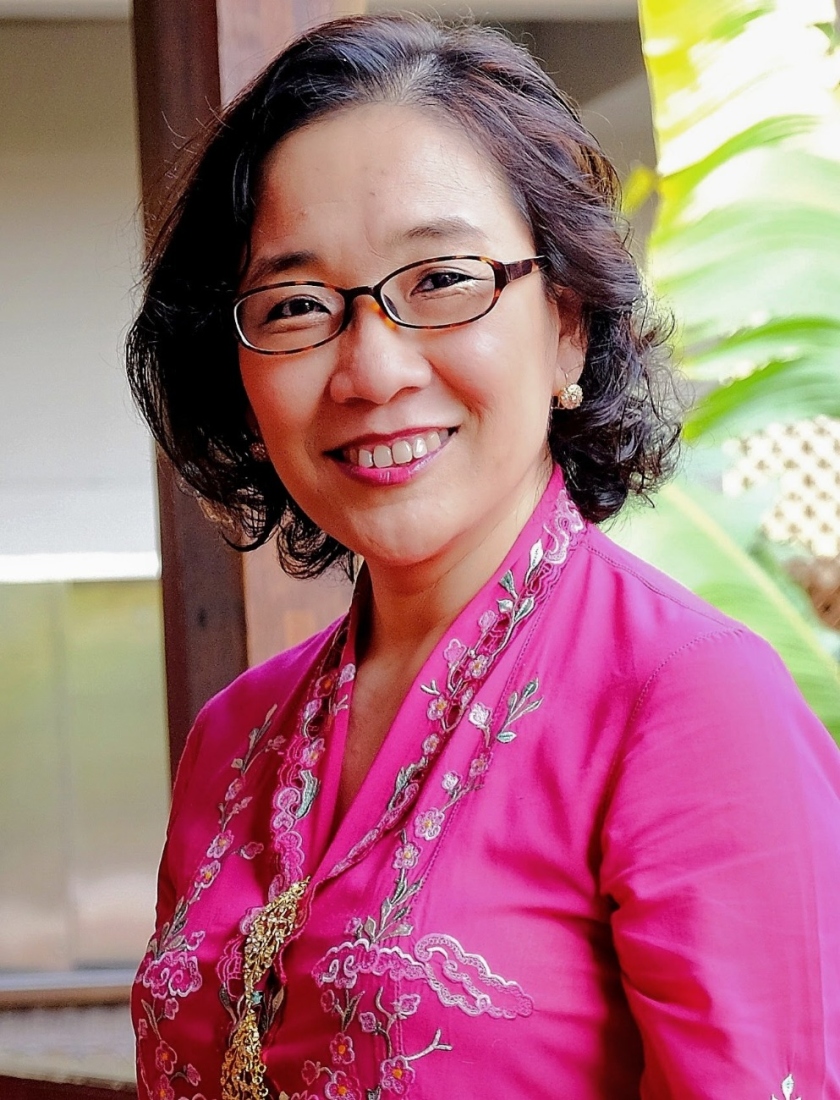
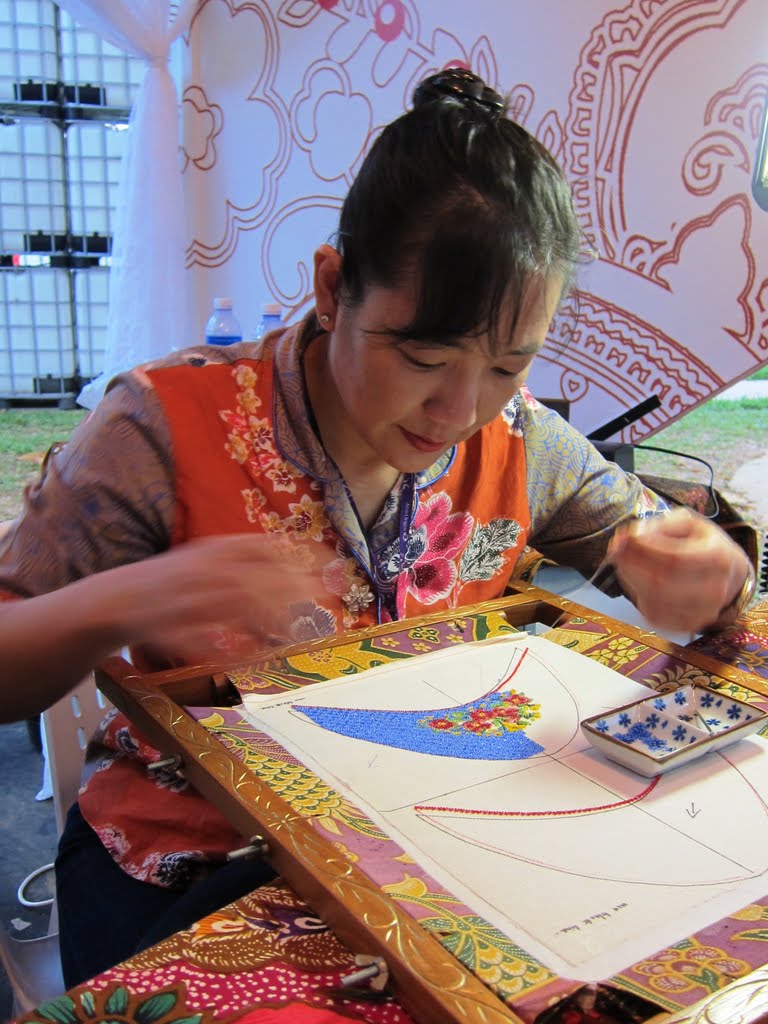
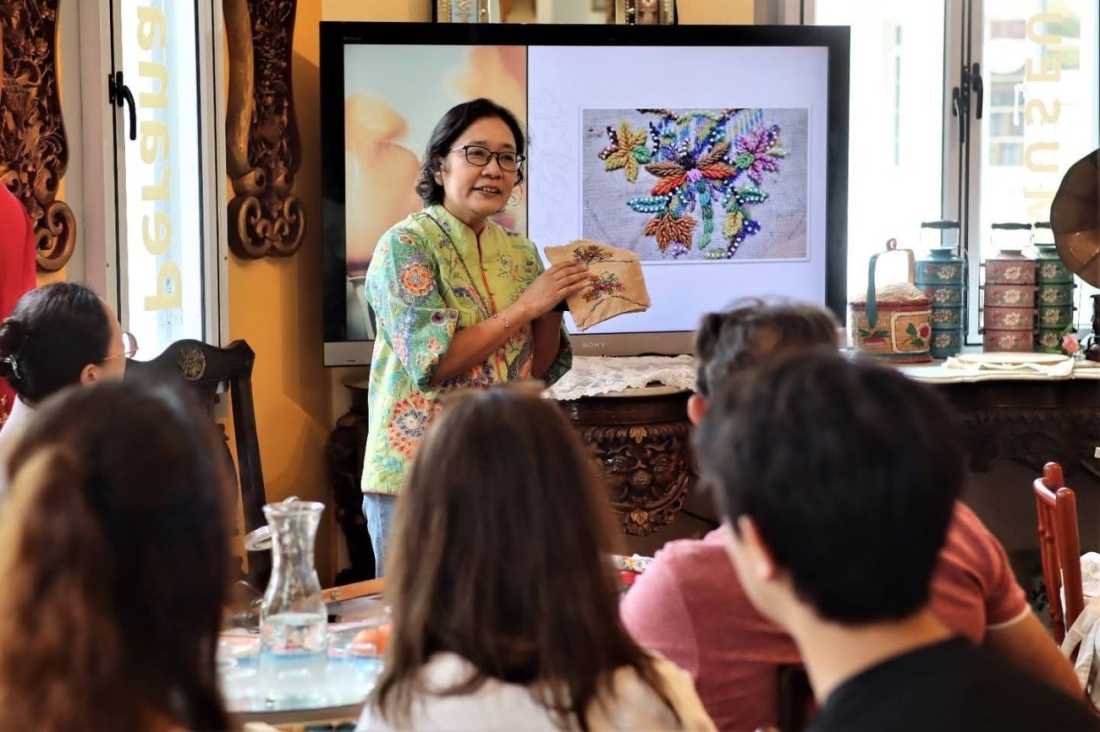
Small glass seed beads, elaborate patterns and hours of patient work. Angeline Kong, a Singaporean beadwork artisan and founder of Nyonya Needlework & Crafts, has devoted almost three decades to the art of traditional Peranakan beadwork. She is dedicated to preserving Peranakan cultural heritage through the delicate art of seed bead embroidery. Her work features mainly Preciosa glass beads, alongside other Czech glass beads and vintage beads.
THE ART OF SEED BEAD EMBROIDERY
At around six years of age, Angeline Kong was fascinated by her grand-aunty’s beaded shoes, which are now approximately a century years old. These shoes were passed down to Angeline, making her the third generation in her family to inherit them. They are now being passed on to the fourth generation, preserving them as a treasured heirloom. Little did she know that these intricate beadwork patterns would eventually lead her to a craft that would become an important part of her life.
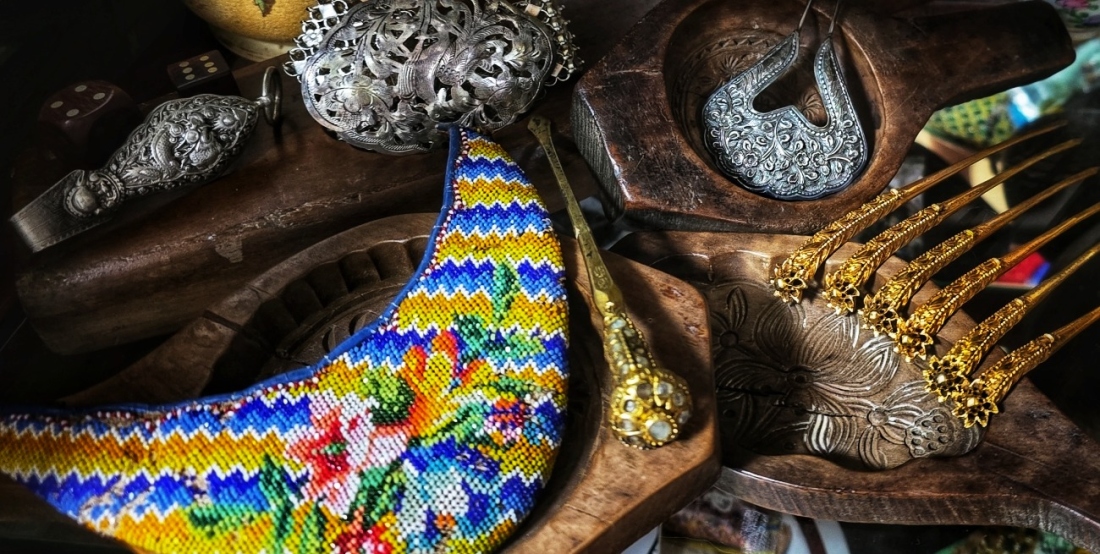
Angeline is a sixth-generation Peranakan from Singapore. Peranakan culture, shaped by the blending of Chinese and local Southeast Asian traditions, has its own distinctive clothing, customs and crafts. Among its most distinctive traditional crafts is Peranakan beadwork, an intricate art form that uses tiny glass seed beads to decorate footwear, clothing and other objects.
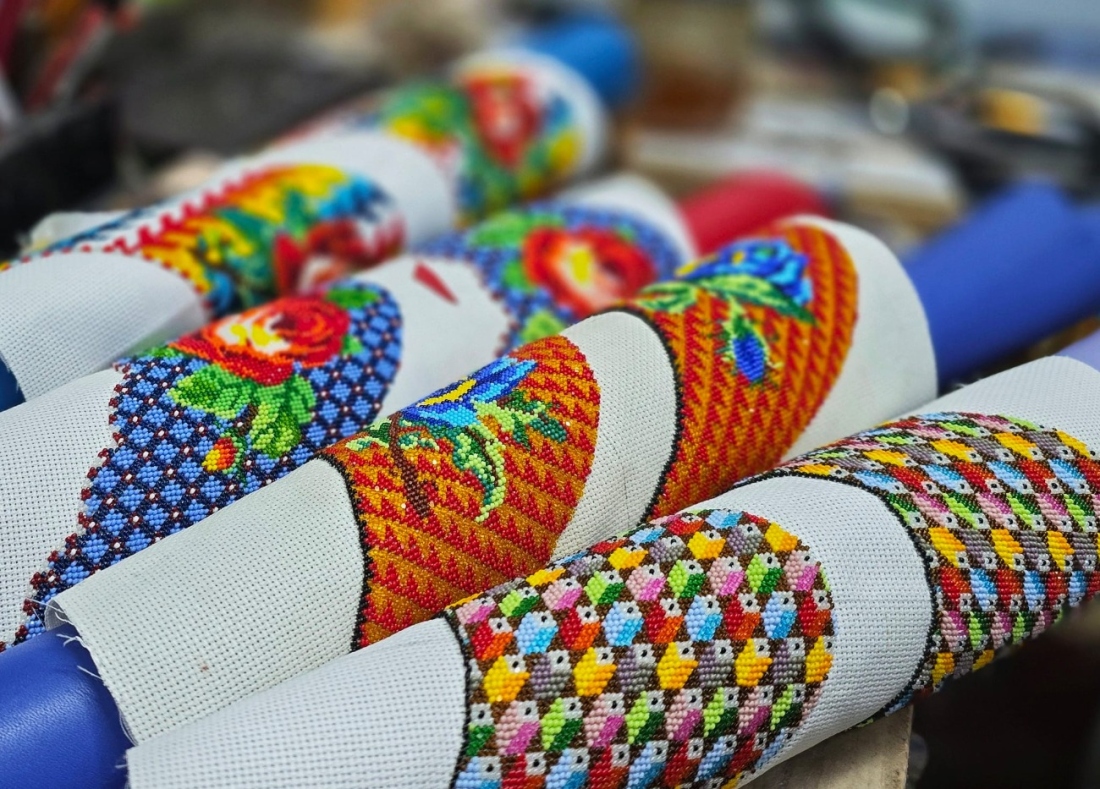
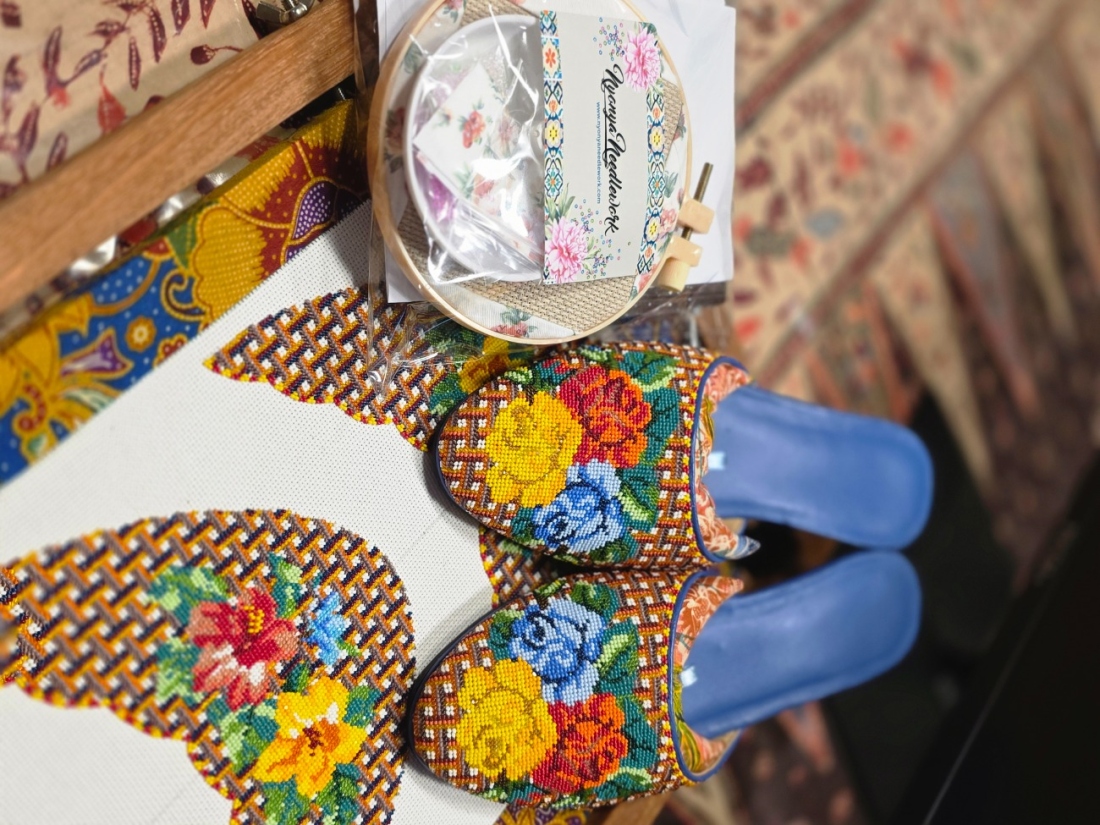
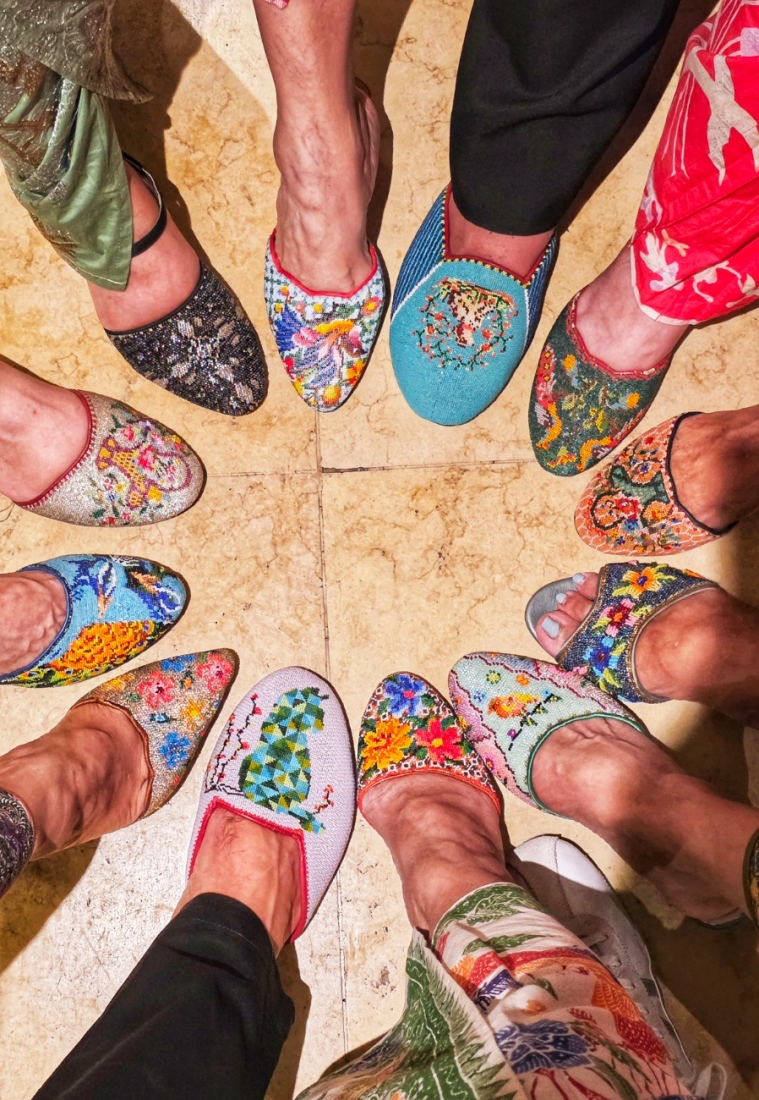
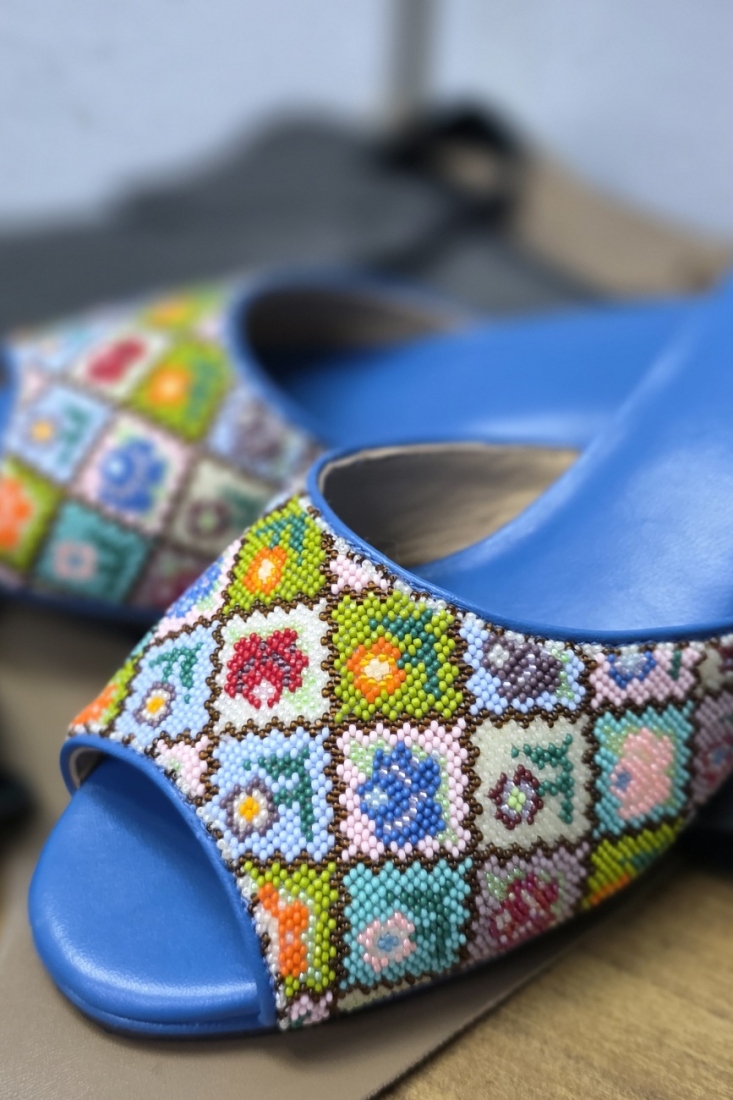
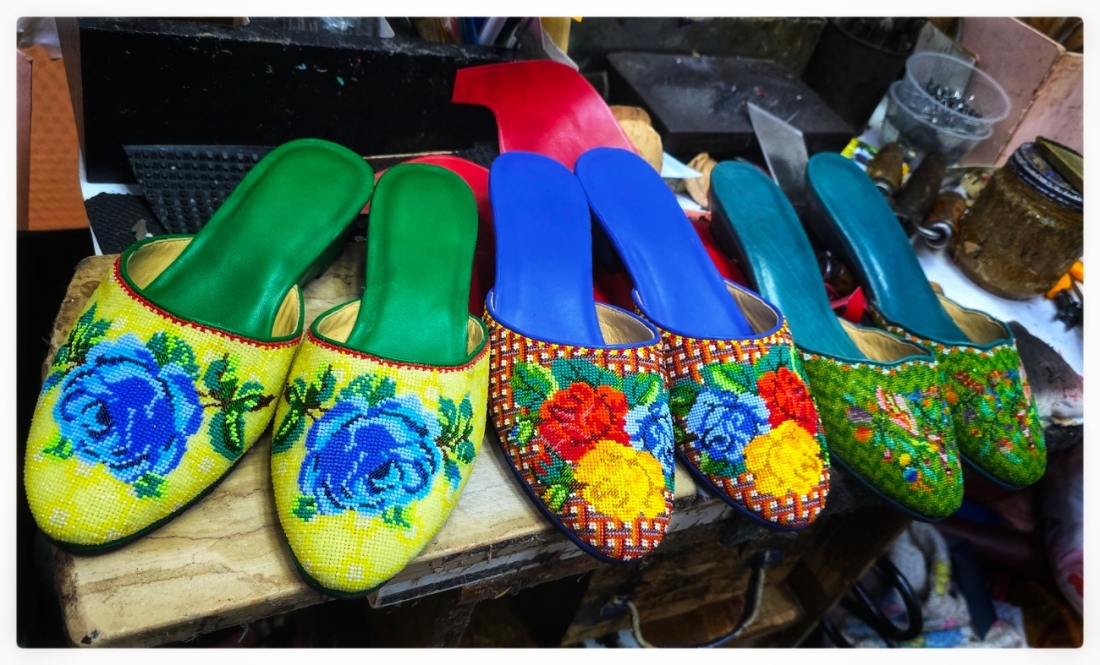
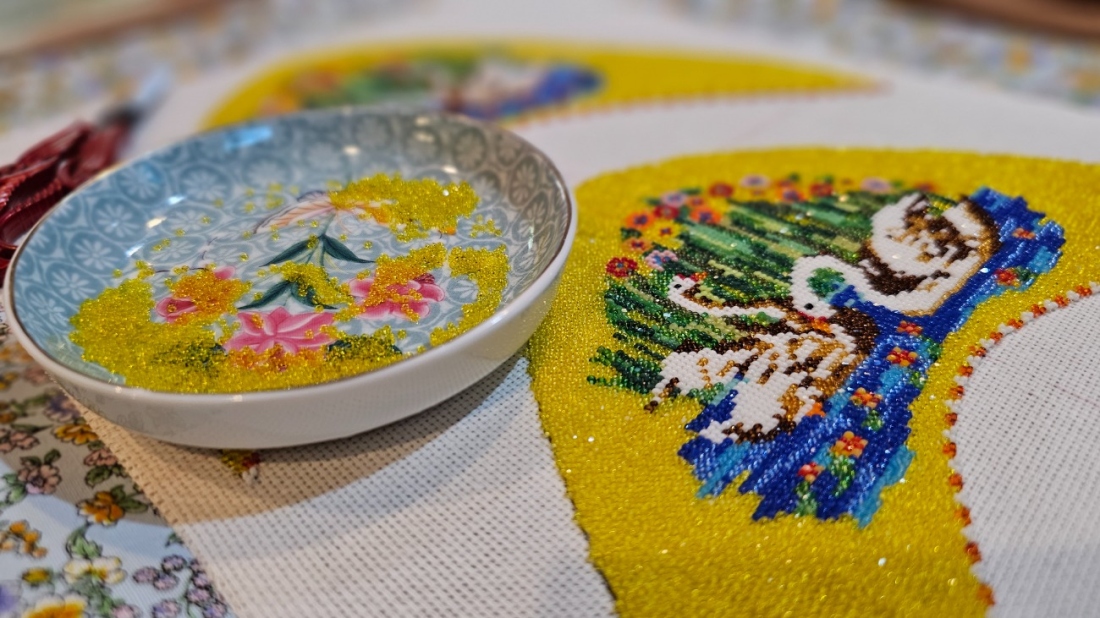
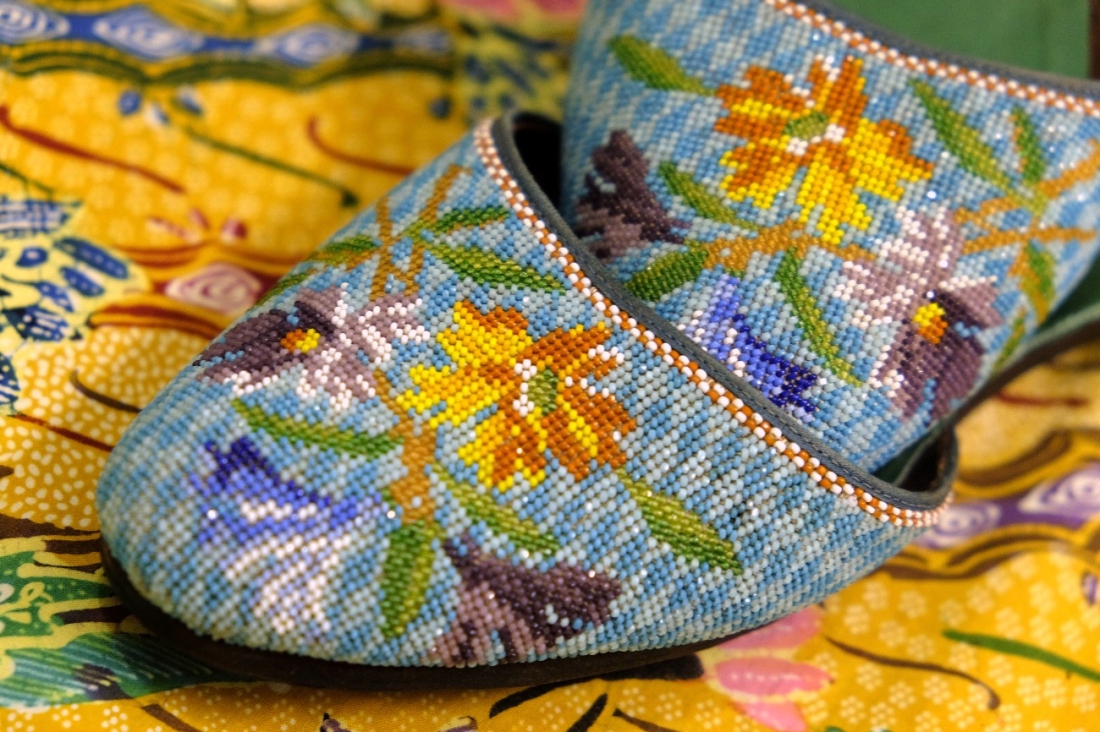
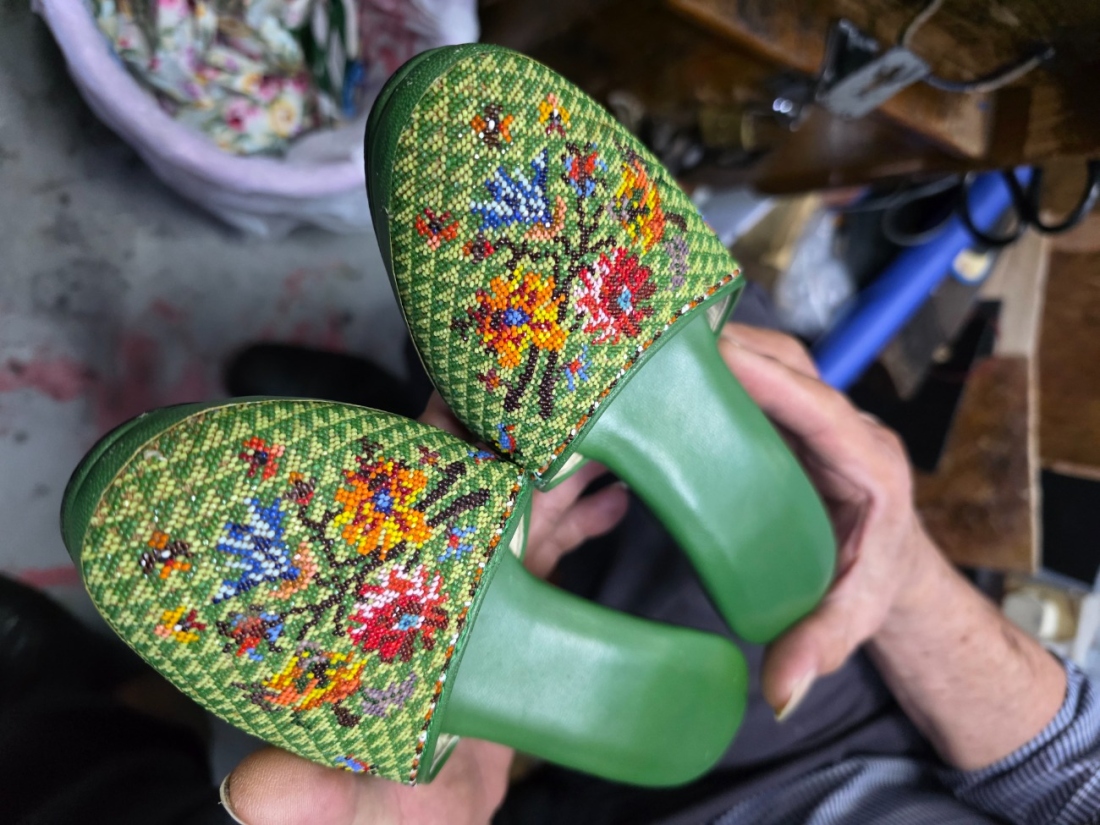
An important part of this tradition involves kasut manek (beaded shoes), which are decorated with elaborate seed bead patterns and worn with traditional attire known as the sarong kebaya. Flowers, birds, butterflies and other motifs are created through the gradual addition of tiny colourful glass beads. Each bead has its place, and the resulting design depends on the dexterity of the artisan, the careful selection of colours and meticulous craftsmanship.
Peranakan beadwork and embroidery reflect Chinese, Malay, Indian and European influences. Chinese auspicious motifs, regional textile traditions and European needlework patterns were adapted to local tastes, while imported European glass beads helped give Peranakan beadwork its distinctive colour and sparkle.
Peranakan beadwork flourished in the late 19th and early 20th centuries in communities across the region, including Singapore, Melaka and Penang. Nyonyas traditionally learnt these skills from their mothers and grandmothers, using tiny glass beads to decorate shoes, accessories and wedding furnishings. Auspicious flowers, birds and other motifs expressed wishes for happiness and good fortune.
Over time, changing lifestyles and the availability of factory-made footwear contributed to the decline of this traditional art, with fewer families passing down these painstaking skills. This placed the craft at risk of being lost. Today, artisans, teachers and learners are helping to revive it, keeping both its techniques and cultural stories alive.
For Angeline, beadwork is a meaningful connection to Peranakan culture and heritage. Each piece carries family memories, traditional motifs and stories passed down through generations. Through her work and teaching, she hopes to share both the skills and the cultural meaning behind them, encouraging others to appreciate this heritage and carry it forward.
FROM WEDDING SLIPPERS TO A LIFELONG PASSION
Angeline didn’t begin studying this seed bead embroidery until adulthood. Around 1997, when preparing for her own wedding, she began to take a more intensive interest in traditional Peranakan clothing and kasut manek beaded slippers. She decided to learn the technique that had so attracted her since childhood.
She attended courses led by Bebe Seet, an expert in Peranakan fashion and traditional seed bead creations. This opened up a path towards what gradually transformed into a long-term passion.
TWO TECHNIQUES, ONE FEELING FOR DETAIL
Peranakan beadwork incorporates several techniques, among which bead embroidery and bead weaving have a significant place.
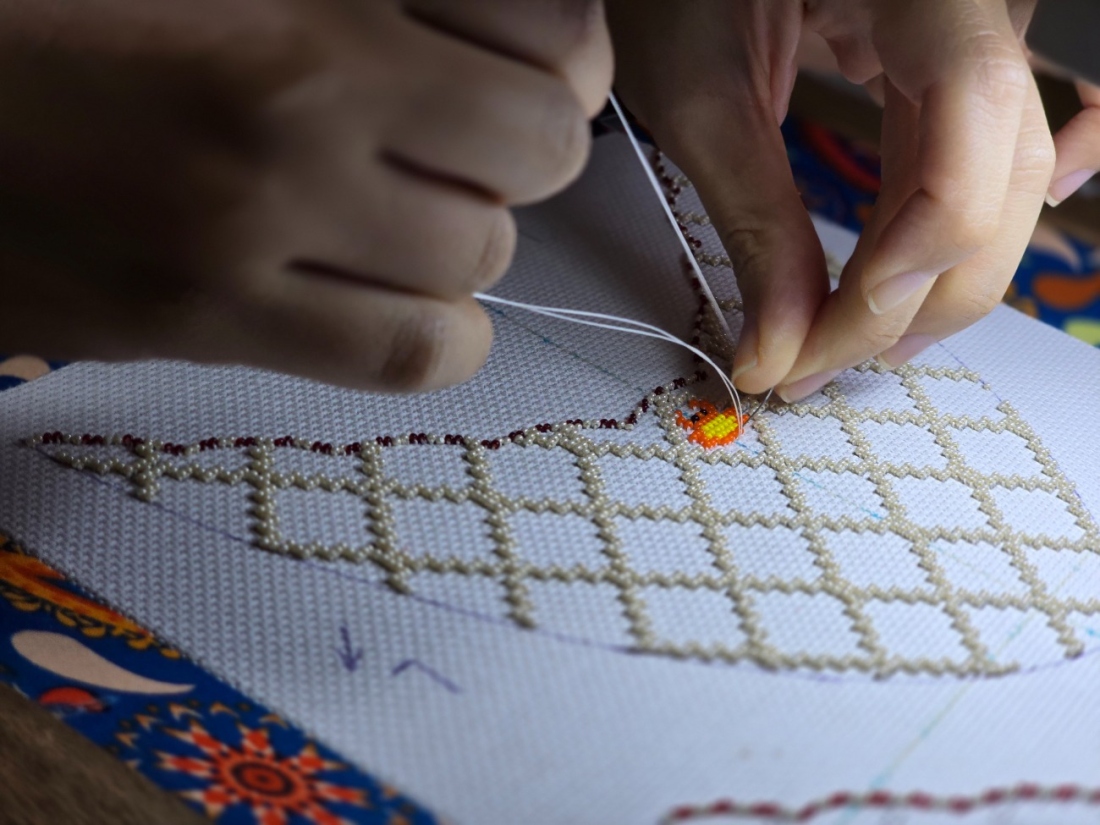
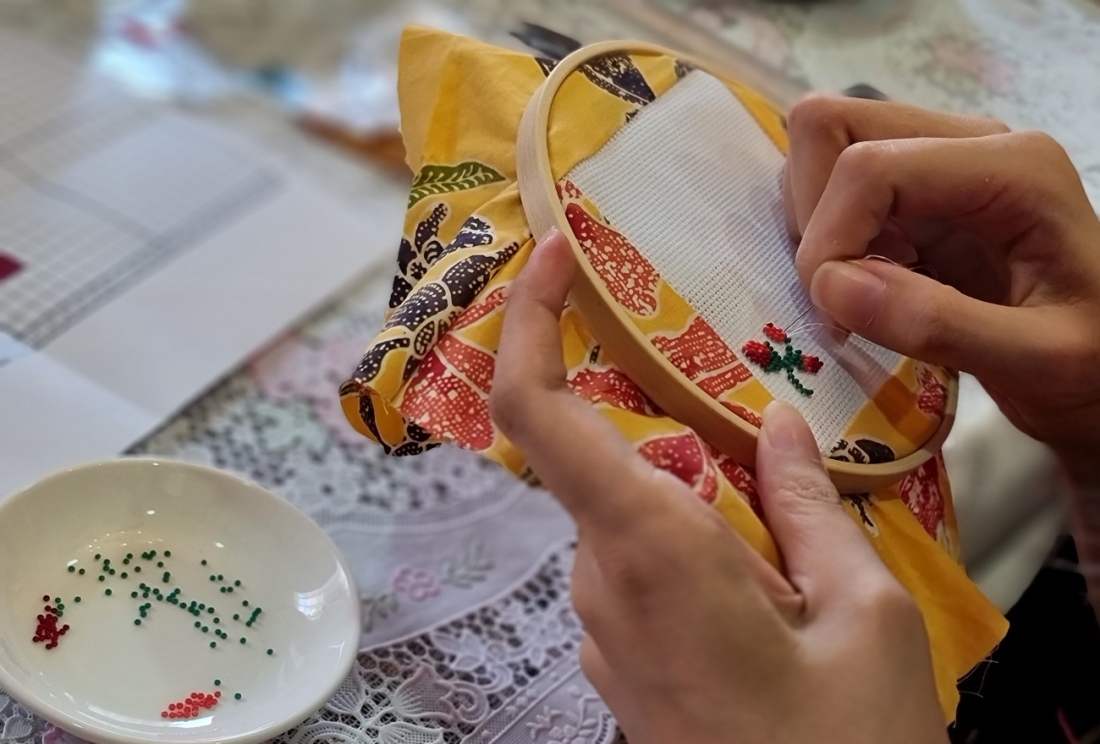
In bead embroidery, the small glass seed beads are sewn onto a base so that decorative patterns are gradually created. Historically, velvet was used for this purpose. Today, Angeline stitches beads onto counted fabric to create panels for kasut manek.
On the other hand, bead weaving enables a structure to be created from interconnected seed beads without a classic textile base. This was often used in Peranakan beadwork during the production of decorative tassels and wedding decorations, amongst other things.
Angeline Kong has been practising Peranakan beadwork since 1997 and uses Czech glass seed beads in her work, including Preciosa Charlotte beads in size 13/0. Her work also includes size 15/0 beads and smaller vintage beads.
“I prefer Preciosa Charlotte Beads in the 13/0 size for our Peranakan beadwork. The cut seed beads have 1-2 small facets that create delicate reflections that give the embroidery its characteristic sparkle. These cut seed beads help me achieve the sparkle I associate with traditional Peranakan beadwork. I most appreciate their quality, uniformity and the wide range of beautiful colours, thanks to which the details and precision of each piece of embroidery stand out,” explained Angeline Kong.
The shoes that sparked Angeline’s interest when she was about 6 years-old.
A TRADITION THAT IS FINDING A NEW AUDIENCE
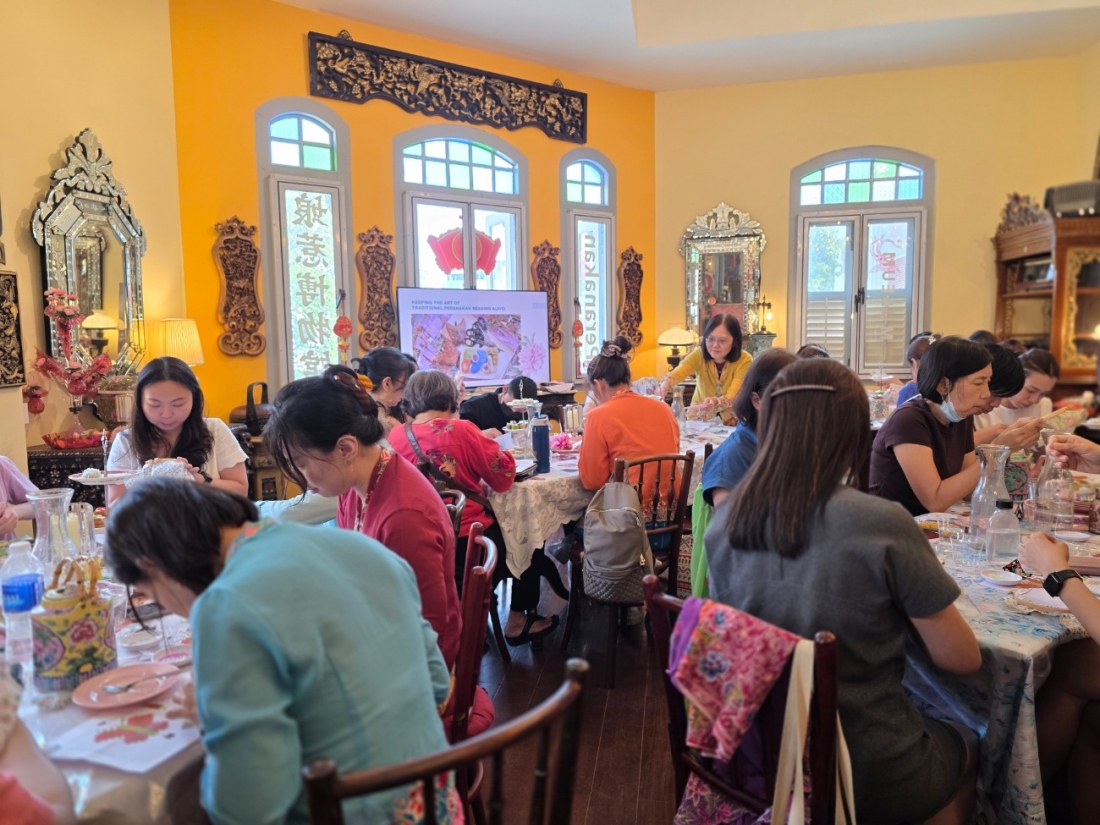
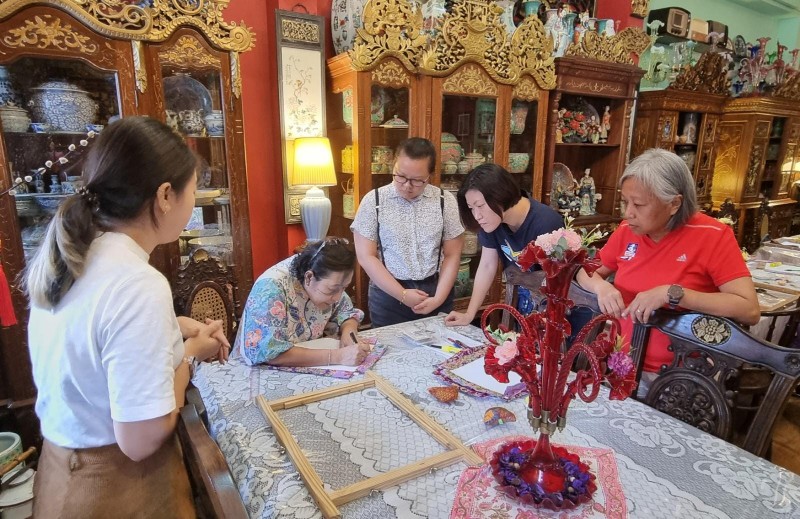
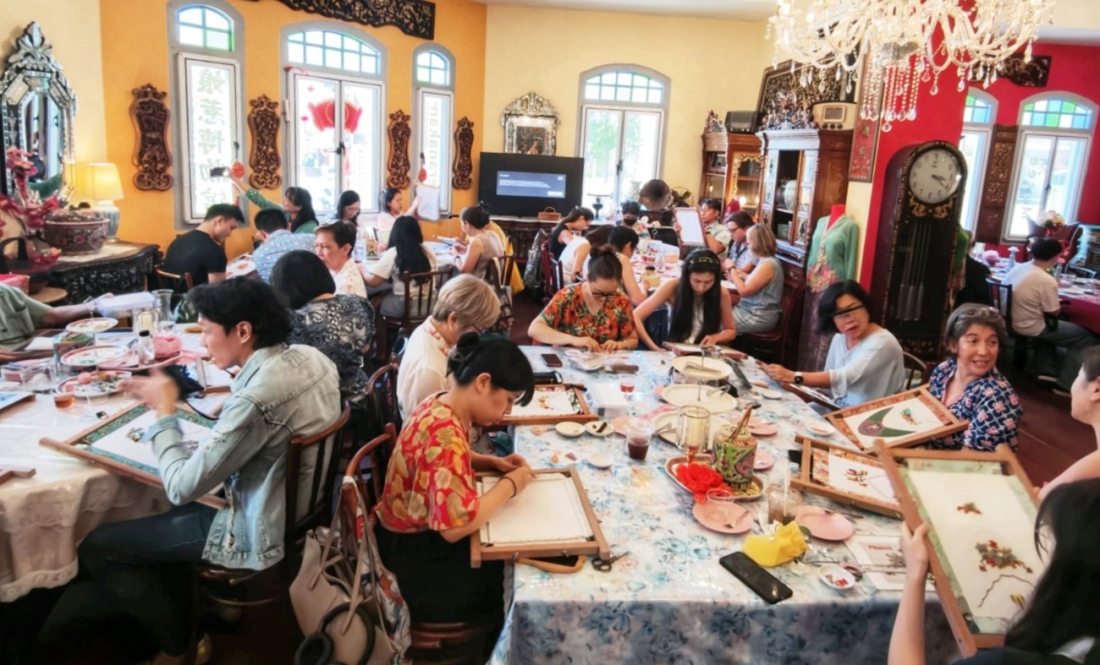
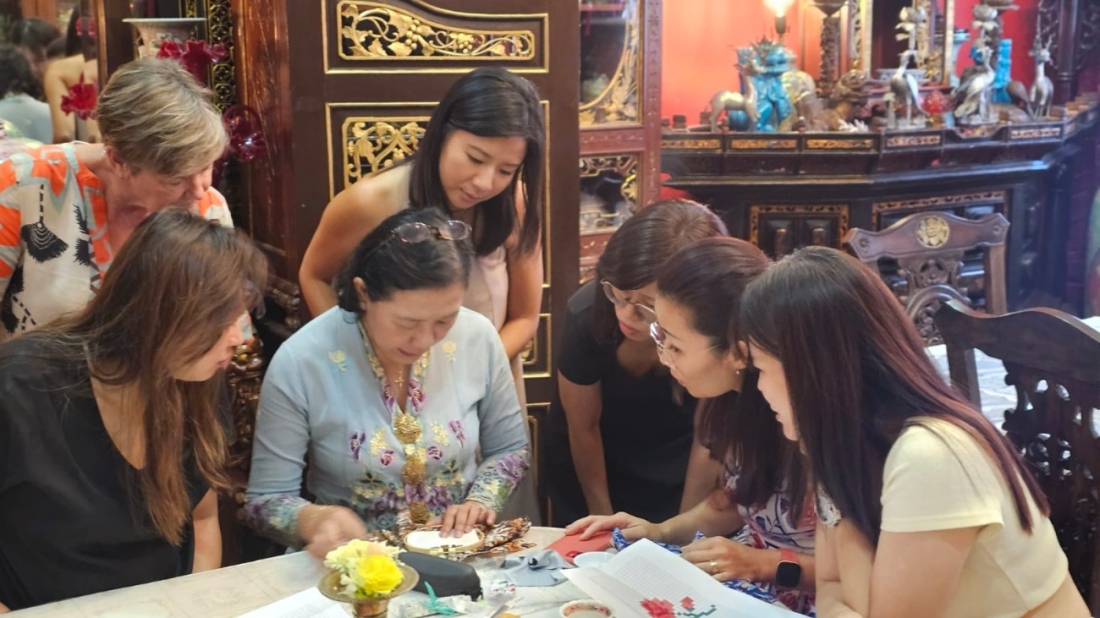
Angeline now conducts workshops, lectures and demonstrations on traditional beadwork techniques, both in Singapore and abroad, in person and online. She has also prepared her own beadwork kits to help interested participants discover this craft and try it for themselves. Her activities also include teaching courses, selling selected materials and creating custom-made beadwork in the traditional Peranakan style.
She has noticed a growing interest in Peranakan beadwork, with the craft gradually finding a place beyond its original cultural context. One notable example is the seed-beaded helmet created for Formula 1 driver Oscar Piastri for the Singapore Grand Prix. This offered an opportunity to introduce traditional Peranakan beadwork to a wider international audience through the world of Formula 1.
Through these efforts, Angeline hopes to share her appreciation of this traditional craft and encourage more people to discover its beauty. Traditions can continue to evolve, inspire new generations and live on, one seed bead at a time.
SOURCES:
History sources:
National Heritage Board, Nyonya Beadwork and Embroidery,
Peranakan Museum, Decorative Textiles,
The Peranakan Association Singapore, Peranakan Beading Keeping a Heritage Craft Alive,
Cultural influences source:
National Heritage Board, Craft × Design showcase, Peranakan Beadwork and Embroidery
This website uses cookies
PRECIOSA ORNELA, a.s. hereby informs you that its website uses cookies You can find more information about our cookies and how your data is processed in the privacy statement. We request your consent to use cookies specified below.